Text Size
Menu
close
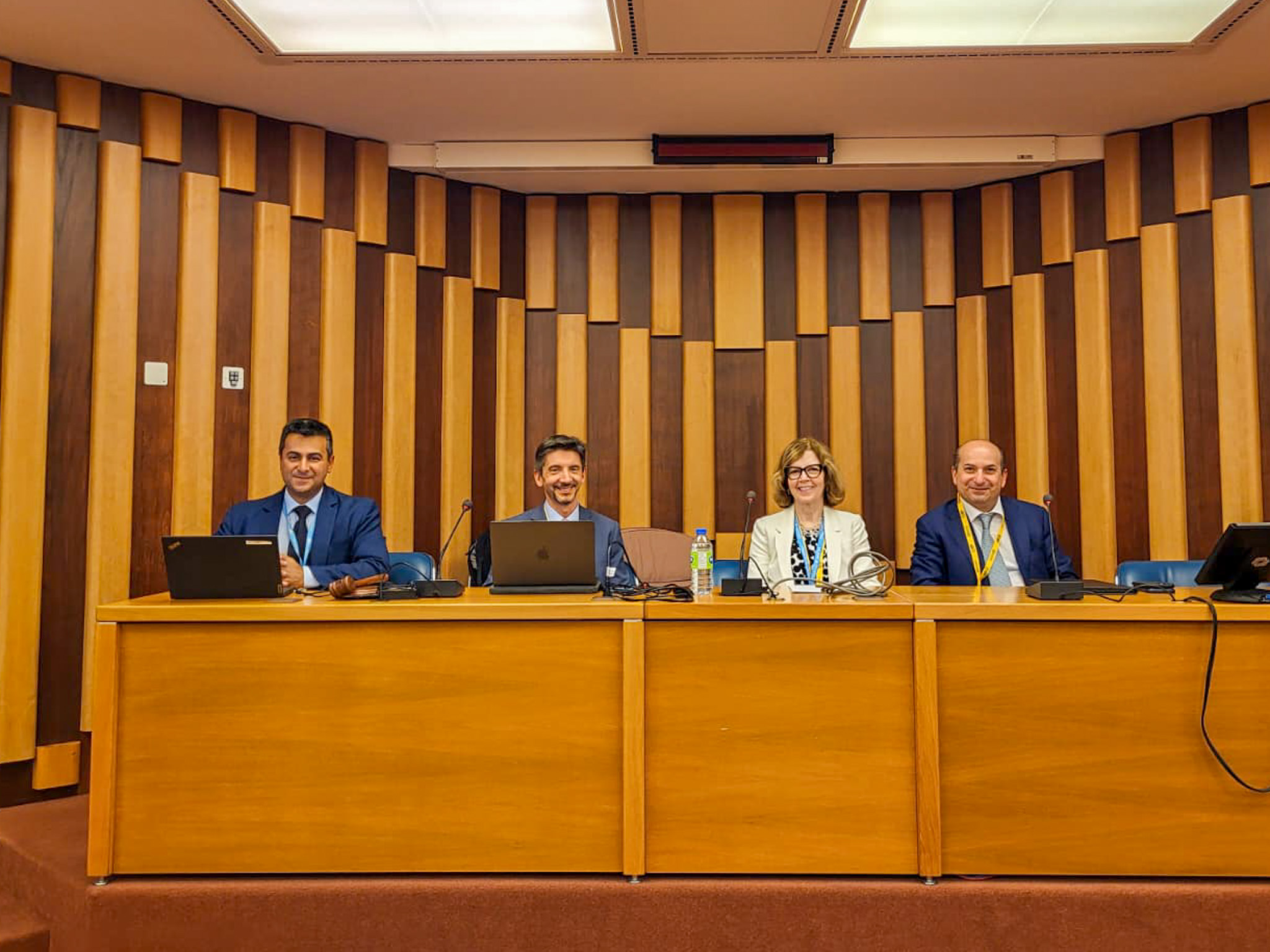
Geneva, 7 July 2026 – The United Nations Joint Staff Pension Fund (UNJSPF), in collaboration with the United Nations International Computing Centre (UNICC), the United Nations Development Programme (UNDP) and the Inter-American Development Bank (IDB), hosted a high-level session today at the World Summit on the Information Society (WSIS) Forum 2026 titled “Scaling Trust: From Digital Proof-of-Life to a UN Digital Identity Ecosystem.” The event explored how a practical pension administration challenge evolved into a pioneering digital identity solution that is helping shape broader thinking on trusted digital public infrastructure and digital identity across the United Nations system.
Opening the session, Rosemarie McClean, Chief Executive of Pension Administration, emphasized that digital transformation succeeds when it is guided by inclusion, trust, cooperation and a commitment to sustainable development. She noted that ensuring beneficiaries can securely and conveniently verify their identity is fundamental to UNJSPF’s mission of serving retirees and beneficiaries in more than 190 countries and territories.
At the center of the discussion was the UNJSPF’s Digital Certificate of Entitlement (DCE), a secure mobile solution that modernizes the annual proof-of-life process through the use of biometrics, blockchain technology and artificial intelligence. What began as a response to operational and accessibility challenges has evolved into a large-scale digital identity platform that today reaches a majority of the Fund’s beneficiaries worldwide.
During the session, Dino Dell’Accio, Deputy Chief Executive at UNJSPF, explained how the DCE has become a model for digital public infrastructure. The solution enabled more than 60 per cent of retirees and beneficiaries to submit proof of life digitally in 2025 and 2026. The initiative demonstrates how user-centered digital services can improve efficiency, strengthen security and increase accessibility for a globally dispersed population.
A major focus of the discussion was the evolution of the DCE into a broader UN Digital ID ecosystem. Max Merelli, UN Digital ID Programme Director, explained how the experience gained through the pension use case is informing the development of a system-wide digital identity solution designed to reduce data fragmentation and facilitate secure data sharing across UN organizations. The UN Digital ID initiative aims to provide a single, trusted digital identity throughout an individual’s UN journey, enabling secure access to services and verified credentials across multiple functions and organizations.
Emily Chakavarika underscored the contribution of UNDP, which has supported the deployment of DCE kiosks to help beneficiaries who may face barriers to accessing digital services. Today, kiosk-based access points are operational in 18 duty stations worldwide, helping ensure access for vulnerable populations and retirees in remote locations.
The importance of partnerships and people-centered solutions was also the focus of Luciana Barbosa, Executive of Pension Plans at IDB, who announced the upcoming launch of the DCE app for IDB beneficiaries.
The panel emphasized that trust in digital identity depends on strong governance and robust safeguards. The DCE and the broader UN Digital ID programme have been built around a “trust-by-design” approach, combining strong authentication, distributed verification, auditable records and user consent mechanisms. Governance, accountability and collaboration among participating organizations were presented as key ingredients for scaling trusted digital services across institutional boundaries.
Looking ahead, speakers outlined a vision of an even more inclusive, secure and interoperable digital identity ecosystem. Future developments aim to expand digital services, reduce administrative burdens and create a seamless experience for staff, retirees and beneficiaries across the UN system, while continuing to address challenges related to accessibility, connectivity and digital inclusion.
The programme and recording of the session are available on the WSIS Forum website: https://www.itu.int/net4/wsis/forum/2026/Agenda/Session/528



